
Key Takeaways
- Ocean freight is the most cost-effective option for non-urgent, heavy, or bulky shipments from China to the USA.
- Choose FCL when your cargo fills at least 15-18 CBM; otherwise, LCL may be more economical but adds handling and transit time.
- Major China origin ports include Shanghai, Shenzhen, Ningbo, and Qingdao; US gateways include Los Angeles, Long Beach, New York, and Savannah.
- Inland delivery can be arranged via rail or truck, and the choice affects both cost and transit time.
- Customs clearance is not automatically included in ocean freight quotes, even for door-to-door services; confirm who handles it in writing.
- To get an accurate quote, provide origin, final ZIP, commodity, cartons, weight, dimensions, cargo-ready date, Incoterm, and special handling details.
Sea freight from China to USA is the right choice when your cargo is non-urgent, heavy, or oversized, and you want the lowest cost per kilogram or cubic meter. Ocean freight from China to US typically offers the most economical transport for commercial shipments, but it requires more planning for lead time, port handling, and inland delivery. This guide explains when ocean freight works, how to choose between FCL and LCL, which routes and ports matter, what transit times you can expect (subject to confirmation), and what you need to get an accurate quote.
When Ocean Freight Is a Practical Fit
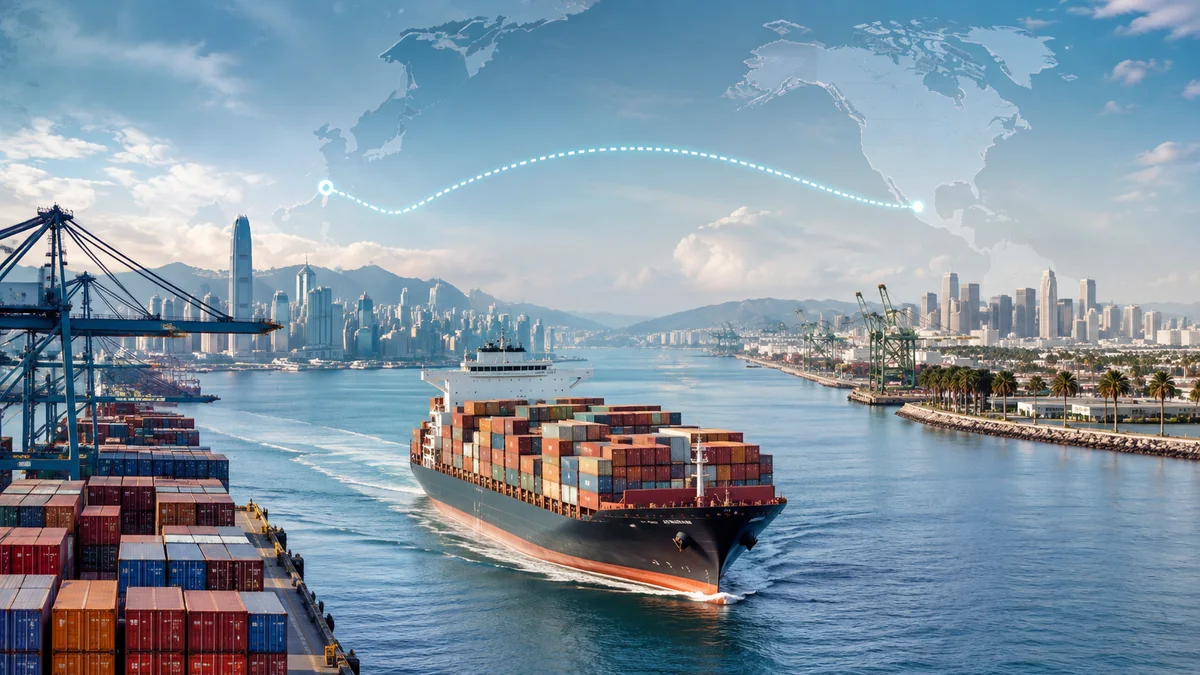
Ocean freight makes sense when your cargo can tolerate a longer transit time and you want to minimize shipping costs. Typical candidates include:
- High-volume, low-density products like furniture, appliances, or packaging materials.
- Heavy machinery, auto parts, or industrial equipment that would be prohibitively expensive by air.
- Full-container-load (FCL) shipments that can fill a 20- or 40-foot container.
- Less-than-container-load (LCL) shipments where you share container space and pay only for the space you use.
If your cargo is time-sensitive, high-value, or perishable, air freight or express services may be a better fit despite higher costs. Ocean transit from China to the US West Coast is historically around 15-25 days and to the East Coast around 30-40 days, but these are only general ranges. Actual transit times depend on the carrier, port congestion, weather, and route, so always request current sailing schedules.
FCL versus LCL and How Container Space or Chargeable CBM Changes the Choice
Choosing between FCL and LCL is one of the first decisions in ocean freight planning. FCL means you book an entire container, while LCL means your cargo shares a container with other shippers’ goods. The choice depends on your cargo volume, budget, and need for control.
FCL (Full Container Load)
FCL is best when your cargo fills at least 15-18 cubic meters (CBM) for a 20-foot container or 30-35 CBM for a 40-foot container. With FCL, you pay a flat rate per container, which often provides a lower cost per CBM compared to LCL. You also get dedicated space and faster transit because the container moves directly from origin to destination without consolidation delays. FCL reduces the risk of damage and pilferage, and gives you more control over the shipment.
LCL (Less than Container Load)
LCL is for cargo that does not fill a full container. The freight rate is based on the greater of the actual weight or the volumetric weight, calculated in CBM. Typically, 1 CBM equals 1,000 kg, but this varies by carrier. LCL is convenient for small shipments, but it has additional costs:
- Consolidation and deconsolidation fees at origin and destination.
- Longer transit times due to waiting for container consolidation.
- Higher risk of damage or loss from multiple handling.
To decide, estimate your total CBM. If your shipment is less than 15 CBM, LCL is often more cost-effective. Above that, FCL might be cheaper per CBM, especially if you have a consistent volume. Your freight forwarder can help you compare exact costs based on current rates.
China Origin Ports, North American Gateways, and Inland-Delivery Planning
Ocean freight from China to USA typically uses major ports on both ends. Common origin ports in China include:
- Shanghai (largest container port)
- Shenzhen (including Yantian, Shekou)
- Ningbo
- Qingdao
- Guangzhou (Nansha)
- Tianjin
- Xiamen
- Dalian
On the US side, key gateways are:
- West Coast: Los Angeles / Long Beach, Oakland, Seattle/Tacoma
- Gulf Coast: Houston
- East Coast: New York / New Jersey, Savannah, Charleston, Norfolk
- Inland via rail: Chicago, Dallas, Kansas City, Memphis
For Canadian destinations, major gateways include Vancouver, Prince Rupert, Montreal, and Halifax. The choice of gateway affects transit time, cost, and inland logistics. For example, shipments to the US Midwest may be faster via an East Coast port with direct rail, even if the ocean leg is longer.
Inland-Delivery Planning
To get your cargo to its final US ZIP or Canadian postal code, you need to decide between port-to-port, port-to-door, or door-to-door. Port-to-port only covers ocean transport; the rest is handled by your own agents. Port-to-door includes inland transportation (typically rail or truck) from the destination port to your warehouse. Door-to-door covers everything from the supplier in China to your receiving dock, but not always customs clearance or duties.
Ocean freight from China to USA often involves a combination of ocean, rail, and truck. The cost and transit time depend on the inland mode and the distance. For example, a container arriving in Los Angeles and moving by rail to Chicago may take 5-8 days by rail, whereas trucking could take 3-4 days but cost more. Some freight forwarders offer intermodal services, but always confirm the details.
Origin, Ocean, Destination, Free-Time, and Delivery Scope
Understanding the full scope of ocean freight services helps you compare quotes and avoid surprises. A typical international move includes five parts:
- Origin services: pickup from the supplier in China, warehouse receiving, consolidation (if LCL), export documentation, and loading onto the vessel.
- Ocean freight: the actual sea voyage from the origin port to the destination port, including the base rate and any fuel surcharges.
- Destination services: unloading, customs clearance coordination, and delivery to your door or warehouse.
- Free time: the number of days you can store your container at the port or terminal before demurrage (for FCL) or detention charges apply. This varies by port and carrier.
- Delivery scope: whether the quote includes inland transportation and the final delivery address, and who is responsible for customs clearance and duties.
Customs Clearance and DDP
Customs clearance is not automatically included in all ocean freight quotes. Even if you book a door-to-door service, it does not automatically mean DDP (Delivered Duty Paid). In DDP, the seller bears all risks and costs, including duties and taxes, until delivery. For most shipments, the importer of record is responsible for customs clearance and paying duties. Always confirm in writing who handles customs brokerage, payment of duties, and how the goods will be cleared.
Rey Logistics coordinates origin activities in China and works with qualified North American partners for customs-facing handoffs and destination delivery. We are not a US or Canadian customs broker, but we ensure that the appropriate licensed partner is engaged.
Documents, Cargo Details, and Questions Needed for a Written Quotation
To receive an accurate sea freight quote, you must provide detailed information. The minimum details are:
- China origin: specific city and warehouse address, if pickup is needed.
- Final destination: exact US ZIP code or Canadian postal code.
- Commodity description: what is being shipped, with a clear trade name.
- Packaging: number of cartons, pallets, or crates.
- Gross weight and dimensions: total weight in kg or lb, and total volume in CBM.
- Cargo-ready date: when the goods will be available at the origin warehouse.
- Incoterms: e.g., EXW, FOB, CIF, DAP, or DDP.
- Special handling: any hazardous materials, temperature-sensitive items, fragile goods, or out-of-gauge cargo.
These details let the freight forwarder determine the appropriate container or LCL space, calculate volume and weight, and identify any special needs. Do not rely on verbal quotes; always request a written quotation that specifies the basis of the rate (FCL per container or LCL per CBM), the routing, the transit time (subject to carrier schedules), and what services are included.
Additional Questions Your Forwarder May Ask
- Are there any specific carrier preferences or routing restrictions?
- Do you need insurance coverage for the cargo?
- What are the acceptable cut-off dates for cargo delivery to the origin terminal?
- Will the delivery be to a commercial or residential address?
- Do you expect any holidays that may affect vessel schedules?
Answering these questions comprehensively helps avoid delays and unexpected charges. Once all information is provided, your freight forwarder can give you a clear cost breakdown and confirm the expected transit time.
Important Considerations for Ocean Freight
- Ocean freight rates fluctuate based on supply and demand, fuel prices, and seasonal peaks.
- Transit times are estimates; actual times can change due to port congestion, weather, or vessel schedule adjustments.
- Free time at destination varies; exceeding it incurs storage charges.
- Customs clearance is a separate process; ensure you have the correct documentation.
Plan ahead and confirm all details in writing before shipment.
Frequently Asked Questions
What is the difference between FCL and LCL in sea freight from China to USA?
FCL means you book an entire container, so you pay a flat rate and get dedicated space. LCL means your cargo shares a container with others and you pay based on the chargeable CBM, which may include additional handling fees. FCL is usually better for shipments over 15 CBM, while LCL suits smaller volumes.
What is the typical transit time for ocean freight from China to the US West Coast?
While exact times vary, it's common to see 15-25 days to the West Coast and 30-40 days to the East Coast. However, these are only estimates. Always ask your forwarder for current transit times based on the intended sailing route.
Does ocean freight from China to USA include customs clearance?
Not automatically. Even if you have door-to-door service, it may not include customs clearance or payment of duties. You, as the importer of record, are responsible for customs compliance. Make sure to clarify in writing who will handle customs brokerage and what Incoterm you are using.
What information do I need to provide for a sea freight quote?
You need the China origin, final US ZIP or Canadian postal code, commodity description, number of cartons, gross weight and dimensions (CBM), cargo-ready date, Incoterm, and any special handling details. Having these details enables an accurate written quote.
Can I ship door-to-door from China to the USA via ocean freight?
Yes, door-to-door ocean freight is available, but it's not automatically DDP. It may include origin pickup, ocean transport, and final delivery, but you must confirm who clears customs, pays duties and taxes, and whether the destination delivery is included. Always get the responsibilities in writing.