
Dimensions + Weight
Confirm packed L × W × H, gross weight and weight distribution before selecting standard or special equipment.
Plan machinery and industrial-equipment freight around packed dimensions, gross weight, lifting points, loading method, container fit and the final receiving site.
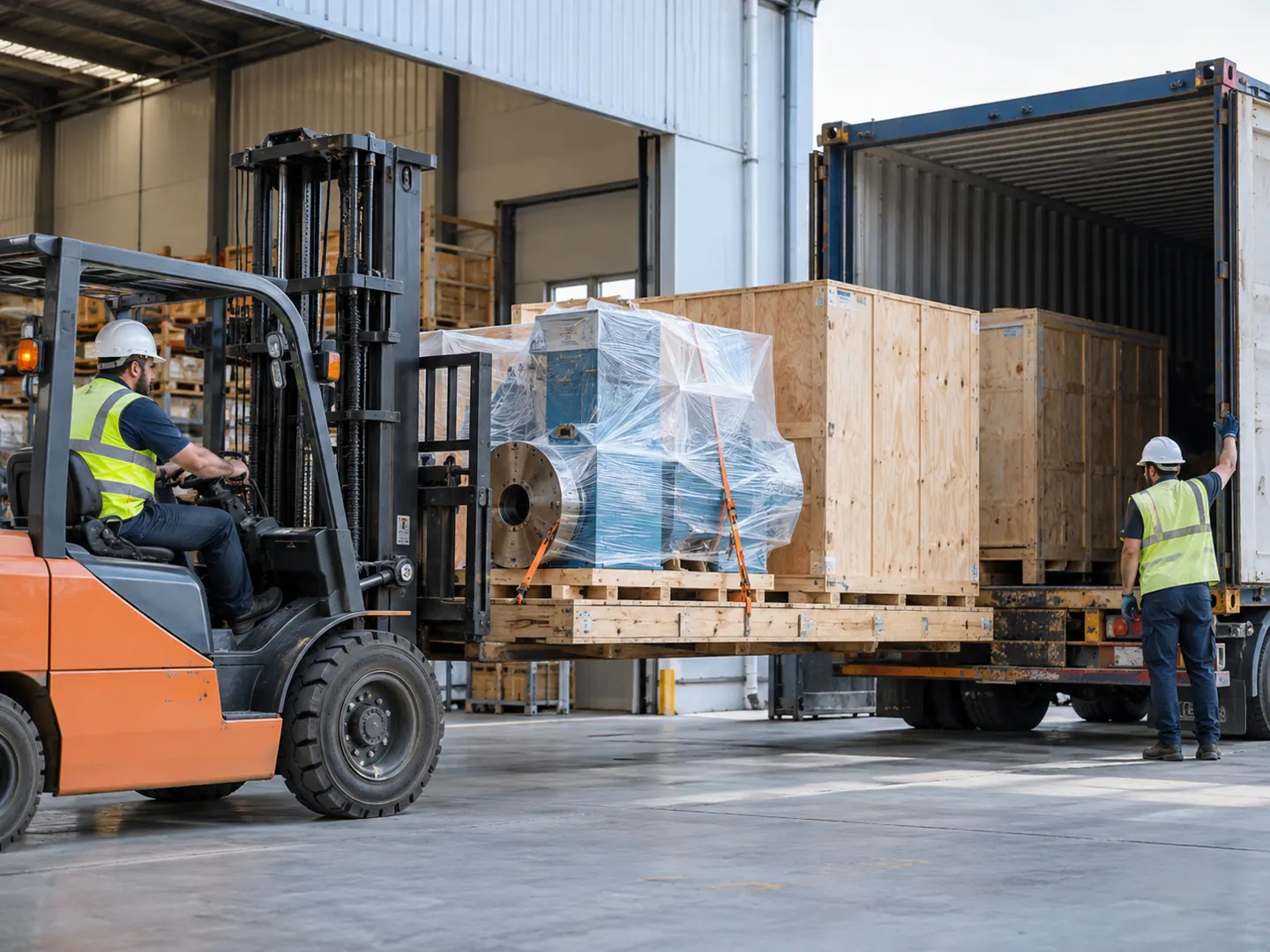
The transport mode is selected after the packed machine and receiving conditions are understood.
Confirm packed L × W × H, gross weight and weight distribution before selecting standard or special equipment.
Crane, forklift, skidding, loading direction and factory access can change the workable equipment and pickup plan.
Export packing should protect the machine and remain compatible with carrier, terminal and unloading requirements.
The final dock, crane, forklift, appointment and restricted-access conditions must be known before door delivery is quoted.
Industrial machinery is rarely a standard carton shipment. Even when the equipment fits inside a normal container, the quote still depends on the packed dimensions, gross weight, centre of gravity, lifting points, crate construction and the way the unit will be loaded at the Chinese factory.
Rey Logistics structures machinery shipments from China around the complete movement: supplier coordination, pickup or factory loading, export handling, international transport, destination customs handoff and delivery to an eligible commercial site in the United States, Canada or Mexico.
The goal is not to promise one transport method before the cargo is reviewed. The goal is to identify whether a standard FCL container, another ocean arrangement or an air option for smaller urgent components is the most practical starting point.
The industry page defines the cargo problem first; the service page then explains the transport method, pricing basis and written scope.
Origin guides add factory pickup, consolidation and export-gateway planning around the actual sourcing location.
Electronics, batteries and Pearl River Delta supplier coordination
Open origin guide China originFoshan / Zhongshan sourcing, furniture, machinery and mixed cargo
Open origin guide China originEast China manufacturing, air cargo and container gateways
Open origin guide China originZhejiang suppliers and high-volume ocean export planning
Open origin guide China originShandong industrial cargo and North China ocean routes
Open origin guide China originBeijing / Hebei industrial cargo and Tianjin Port
Open origin guideUse the destination guide to add gateway, customs handoff, inland movement and city-specific receiving requirements.
Gulf gateway for industrial and project cargo
Open destination guide USATexas inland distribution and industrial receiving
Open destination guide USAMidwest inland freight, air and distribution hub
Open destination guide USASoutheast ocean gateway and inland commercial delivery
Open destination guide CanadaGTA air / inland delivery and distribution planning
Open destination guide MexicoNorthern Mexico industrial and factory delivery planning
Open destination guideThese four planning stages convert product information into a workable origin, transport and destination scope.
Confirm machine description, packed dimensions, gross weight, crate type, lifting points and photos.
Determines whether the cargo can use a standard container and what loading precautions are needed.Coordinate the factory, pickup vehicle, loading schedule, export documents and port cutoff.
Reduces delays caused by incomplete dimensions, late packing or unsuitable loading access.Compare FCL, shipment-specific ocean arrangements and air freight for eligible urgent components.
Balances equipment size, handling risk, urgency and the final destination.Coordinate customs information, terminal release, commercial delivery appointment and unloading requirements.
Connects the international movement to the real receiving conditions at the destination.Each stage is confirmed against the actual cargo before the route or quotation is treated as workable.
Collect the machine description, value, package count, packed dimensions, gross weight, photos and lifting information.
Check the crate, base, moisture protection, loading method and factory access before selecting the export plan.
Match the cargo to the Chinese export gateway, container or freight option and North American destination market.
Prepare the shipment for export, carrier movement, customs handoff and commercial delivery.
The industry keyword identifies the cargo type; the actual route still depends on shipment-specific data.
Answers are planning guidance. Carrier acceptance, customs and final delivery remain shipment specific.
Provide the factory city, product description, packed dimensions, gross weight, package count, photos, cargo-ready date and final US ZIP code or Canadian postal code. Loading and unloading information should also be included when available.
FCL is often a practical option for machinery that fits safely inside a standard container, but the packed size, weight distribution and loading method must be checked before the route is confirmed.
Factory pickup or factory loading can be coordinated when the pickup address, access conditions, loading time and cargo details are confirmed.
The delivery and unloading scope must be confirmed for each shipment. The buyer should disclose whether the site has a dock, forklift, crane, appointment requirement or restricted access.
Eligible replacement parts and smaller assemblies can be reviewed for air freight when their dimensions, weight, product characteristics and urgency are known.
Send packed dimensions, gross weight, photos, lifting information, Chinese factory address and final unloading conditions.