
Key Takeaways
- Door-to-door international shipping from China means one provider coordinates supplier pickup, main transport, customs-facing handoffs, and destination delivery under a written scope.
- Door-to-door service is not automatically DDP; importer, duty, tax, customs, and delivery responsibilities must be confirmed in writing for each shipment.
- Rey Logistics coordinates customs-facing handoffs through qualified North American partners and does not act as a licensed US or Canadian customs broker.
- A comparable quotation needs the China origin, final US ZIP or Canadian postal code, commodity, cartons, gross weight, dimensions, cargo-ready date, Incoterm, and special handling details.
- Rates, transit times, capacity, cutoffs, and delivery dates depend on carrier, port, cargo, season, and destination, so they require current written confirmation.
- Mexico enquiries require manual review and are outside the approved public USA and Canada route dataset.
Door-to-door international shipping from China means one provider coordinates the move from your supplier’s premises to your named US or Canadian address, instead of you booking each leg separately. It matters when your team has limited freight experience, when several suppliers must be consolidated, or when you want a single booking and milestone trail rather than separate export, ocean or air, and destination arrangements. Door-to-door service shipping is a scope of coordination, not a promise about duties: it is not automatically DDP, so customs, duty, tax, and delivery responsibilities must be confirmed in writing for each shipment.
The shipment facts that change the decision
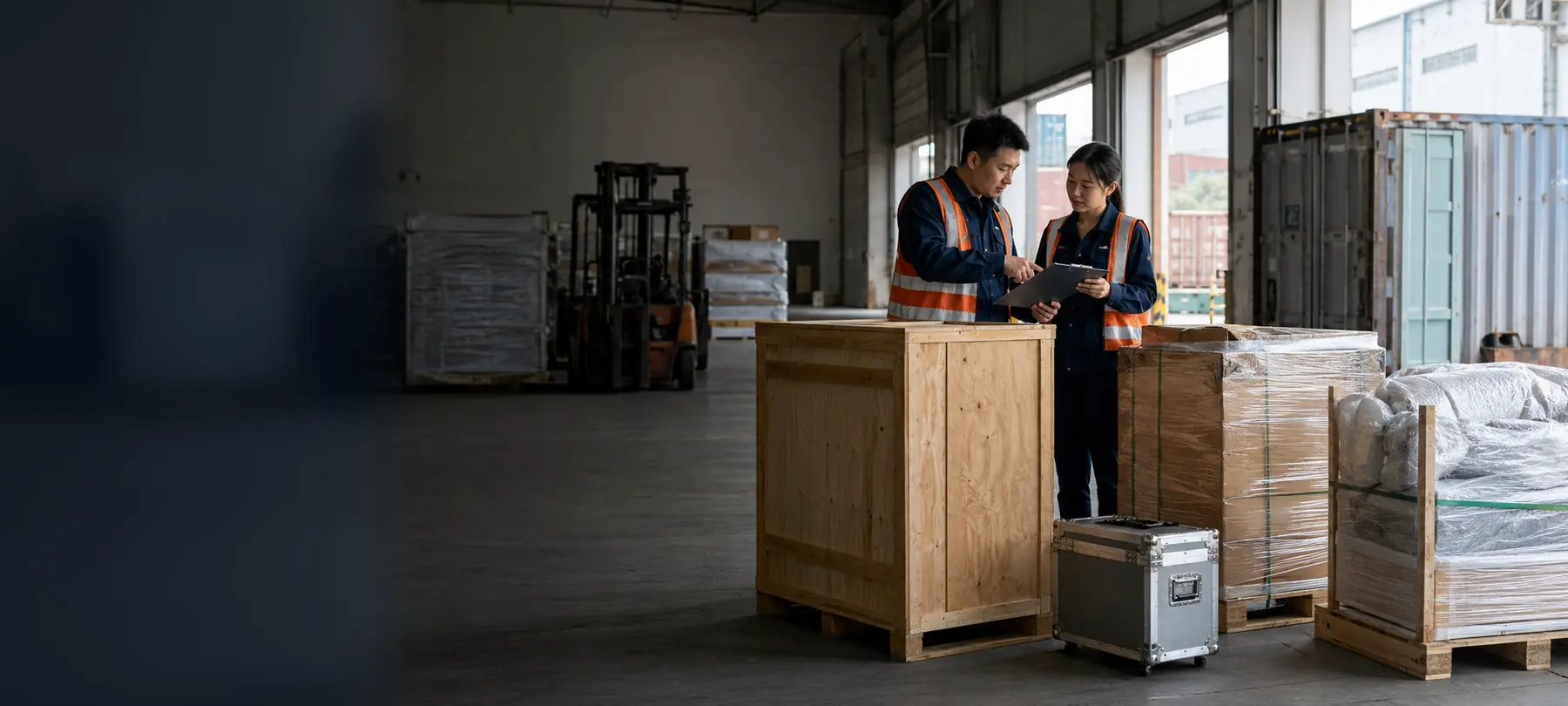
Door-to-door pricing and feasibility are shipment-specific. Two importers with the same product can receive very different quotations because of the details below. Treat general guidance as planning input only, and require written confirmation from the carrier, broker, or Rey Logistics before committing to a plan.
- China origin and cargo-ready date. The city or province of the supplier determines pickup arrangements and which export gateways are practical. A firm cargo-ready date lets providers plan booking and loading around your actual production finish.
- Destination details. A full US ZIP code or Canadian postal code, plus delivery conditions such as dock access, liftgate need, appointment requirements, and inside delivery, affects how the final leg is scoped.
- Commodity and handling profile. Product type, carton count, gross weight, and dimensions drive equipment, loading method, and consolidation choices. Anything fragile, high-value, or requiring special handling should be declared early.
- Incoterm and payment terms. Who arranges and pays for each leg, and where risk transfers, must be clear before booking. The Incoterm on your purchase order should match what you ask the freight provider to quote.
- Customs-facing responsibilities. Import clearance and duty and tax handling are performed by qualified North American partners, not by Rey Logistics as a broker. The importer of record and broker instructions need to be settled in writing.
- Season and capacity. Space availability and cutoffs vary by carrier, lane, and time of year. No schedule should be assumed without current written confirmation.
How the process normally works from Chinese supplier to North American destination
The sequence below reflects a typical commercial move. The exact steps, documents, and handoffs depend on your cargo, origin, destination, and the parties involved.
- Scope and quotation. You share origin, destination, commodity, cartons, gross weight, dimensions, cargo-ready date, Incoterm, and special handling. The provider returns a written scope showing what is included and what is excluded.
- Supplier coordination and pickup. China-origin support may include supplier pickup, warehouse receiving, and cargo consolidation when multiple suppliers are involved. Loading milestones are confirmed as the shipment moves.
- Export documents and booking. Export-document coordination and booking sit with the provider or your supplier, depending on the agreed Incoterm. Document accuracy is a shared responsibility, and classification questions belong with qualified parties.
- Main transport. Ocean freight, FCL, LCL, and air freight are the core choices. Each has different planning implications for volume, timing sensitivity, and handling.
- Customs-facing handoff. Destination clearance is coordinated through qualified North American partners. The importer of record, broker, and any bond or entry requirements should be confirmed before departure, not after arrival.
- Destination delivery. The final leg is arranged to the confirmed address under the agreed terms. Access limitations, appointment windows, and unloading capability should be stated in the quotation.
Options, trade-offs, and scope questions to compare
Door-to-door proposals are easier to compare when each one is broken into the same parts. Use the table below as a comparison framework, then confirm the actual inclusions and exclusions in writing.
| Scope element | What to ask | Why it changes the decision |
|---|---|---|
| China origin handling | Is supplier pickup, warehouse receiving, or consolidation included? | Multiple suppliers often need consolidation to avoid separate pickups. |
| Main transport | Ocean FCL, ocean LCL, or air freight, and why? | Volume, weight, and timing sensitivity point to different modes. |
| Export documentation | Who prepares and checks export documents? | Responsibility shifts with the agreed Incoterm. |
| Customs-facing handoff | Which qualified North American partner clears the cargo, and who instructs them? | Importer, duty, and tax responsibilities must be explicit. |
| Destination delivery | What access, appointment, and unloading conditions apply? | Delivery scope depends on the receiving site, not just the ZIP code. |
| Exclusions | What is expressly not included? | Exclusions are where budget surprises usually come from. |
Two scope questions deserve particular attention. First, confirm whether door-to-door is being quoted as a coordination service with duties and taxes handled separately, or as a DDP arrangement. Door-to-door is not automatically DDP, and the two should never be assumed to be the same. Second, confirm which party is the importer of record and who provides broker instructions. Rey Logistics coordinates customs-facing handoffs through qualified North American partners; it does not act as a licensed US or Canadian customs broker.
Also note what is outside the approved route dataset. Mexico enquiries require manual review. Domestic North American trucking is not marketed as a standalone service, so a door-to-door scope should be evaluated as part of an international move rather than as a trucking quote.
Practical preparation checklist before requesting a quotation
A complete request shortens back-and-forth and produces a scope you can actually compare. Gather the following before you ask for pricing.
- China origin city or province and supplier contact details.
- Final US ZIP code or Canadian postal code, plus site access notes.
- Commodity description in plain commercial terms.
- Carton count, gross weight, and dimensions.
- Cargo-ready date and any production constraints.
- Incoterm stated on the purchase order.
- Special handling: fragile, high-value, temperature-sensitive, or oversized items.
- Importer of record and preferred broker arrangements, if already established.
- Destination receiving hours, appointment rules, and unloading equipment.
Expect the provider to confirm inclusions, exclusions, and responsibilities in writing. Rates, transit times, capacity, cutoffs, and delivery dates remain subject to shipment-specific written confirmation because they depend on the carrier, port, cargo, season, and destination. Classification, duty treatment, tax, dangerous-goods, and regulatory questions should be directed to qualified parties rather than resolved from a general guide.
A door-to-door quotation is only useful when it states exactly where the provider’s responsibility starts and stops, and which party handles customs, duty, tax, and final delivery.
Frequently Asked Questions
Is door-to-door shipping from China the same as DDP?
No. Door-to-door describes who coordinates the move from origin to destination, while DDP describes how duties and taxes are handled under the agreed terms. Rey Logistics does not treat door-to-door as automatically DDP, so the importer, duty, tax, and delivery responsibilities should be confirmed in writing before booking.
Can Rey Logistics pick up from multiple Chinese suppliers and consolidate the cargo?
China-origin support may include supplier pickup, warehouse receiving, cargo consolidation, export-document coordination, booking, and loading milestones. Whether consolidation fits your shipment depends on the suppliers' locations, cargo-ready dates, and cargo profile, so it should be scoped in the quotation.
Who handles US or Canadian customs clearance on a door-to-door shipment?
Customs-facing handoffs and destination delivery are coordinated through qualified North American partners. The importer of record and broker instructions need to be agreed in writing, and classification, duty, and regulatory questions should go to those qualified parties.
What information do I need before asking for a door-to-door quotation?
Provide the China origin, final US ZIP or Canadian postal code, commodity, carton count, gross weight, dimensions, cargo-ready date, Incoterm, and any special handling details. Site access, receiving hours, and unloading equipment notes also help define the destination delivery scope accurately.
Can Rey Logistics arrange delivery to Mexico as part of a door-to-door shipment?
Mexico enquiries require manual review and are not part of the approved public USA and Canada route dataset. If your destination is in Mexico, raise it separately so the scope can be reviewed rather than assumed within a standard quotation.