
Key Takeaways
- Door-to-door freight shipping coordinates pickup, export handling, international transport, customs handoffs, and final delivery, but it is not automatically DDP.
- The exporter, importer of record, qualified customs broker, and freight forwarder have distinct responsibilities that should be named in writing.
- Commercial invoice, packing list, classification, origin, and cargo data must align across documents to reduce border delays.
- Incoterms define risk and cost transfer, while door-to-door is a service scope; duty, tax, and clearance responsibility must be confirmed per shipment.
- Rey Logistics coordinates through qualified North American partners and is not a licensed US or Canadian customs broker.
- A useful quotation needs origin, destination postal code, commodity, cartons, gross weight, dimensions, cargo-ready date, Incoterm, and special handling details.
Door-to-door freight shipping is an arrangement where a single provider coordinates the movement of your commercial cargo from a supplier in China to a final destination in the US or Canada, including pickup, export handling, international transport, customs handoffs, and final delivery. It controls the chain of responsibility and the handoff points across borders, but it is not automatically Delivered Duty Paid (DDP). The exact scope, who clears customs, who pays duties and taxes, and who delivers must be confirmed in writing for each shipment.
What Door-to-Door Freight Shipping Controls
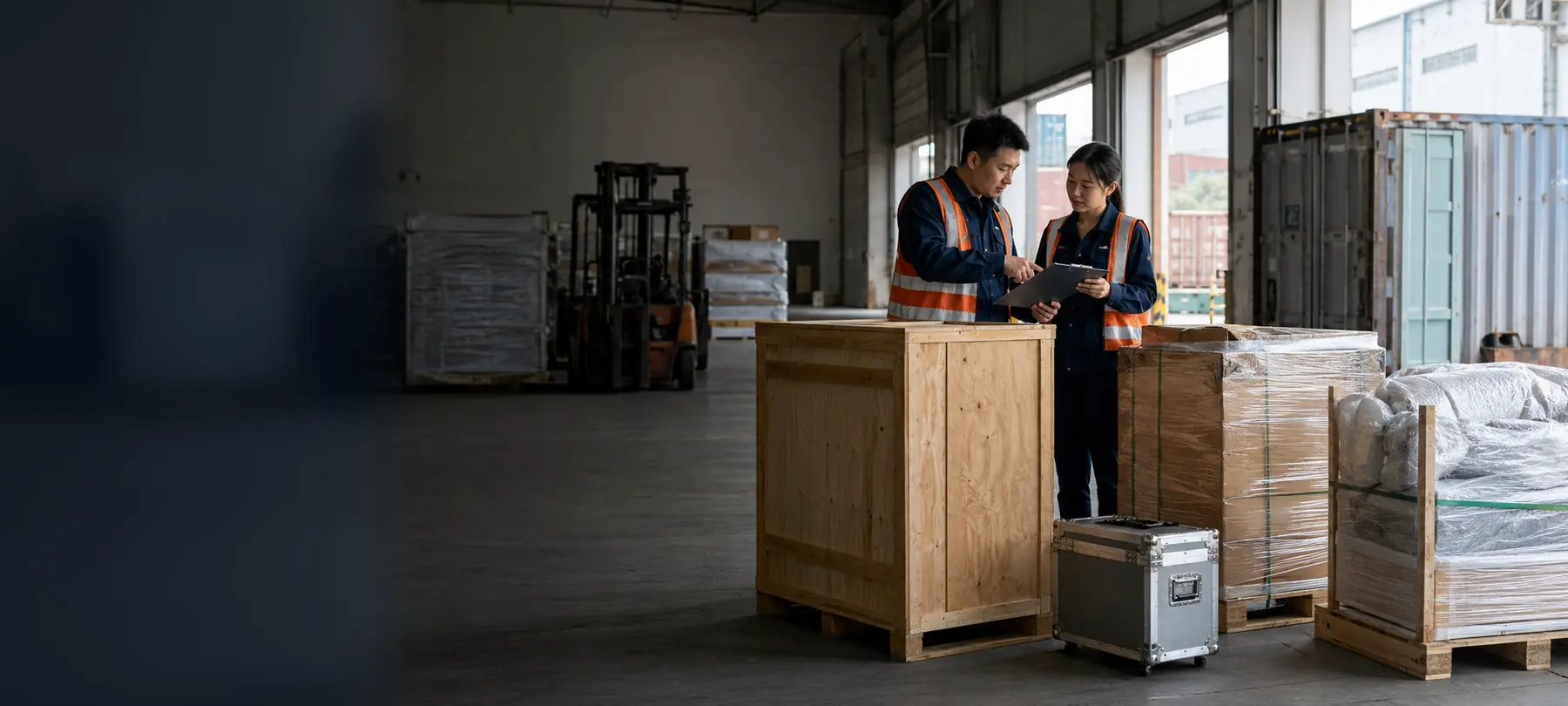
Door-to-door shipping controls the operational sequence from the supplier’s door to your destination. It defines who arranges pickup, who handles export documentation, who books freight, who manages customs-facing steps, and who completes final delivery. It does not, by itself, determine who is the importer of record, who pays duty and tax, or whether the terms are DDP. Those are commercial and customs decisions that must be stated in the Incoterm and in the service agreement. A door-to-door quote may include all touches, or it may exclude destination charges such as duty, tax, customs brokerage, or residential delivery. Because carrier, port, broker, cargo, season, and destination affect the actual steps, each shipment requires current written confirmation of scope.
Exporter, Importer of Record, Qualified Customs Broker, and Freight Forwarder Responsibilities
Four parties typically appear in a China-origin door-to-door shipment: the exporter (supplier), the importer of record, a qualified customs broker, and a freight forwarder. Their roles are distinct, and confusion between them is a common source of delay.
- Exporter/supplier: Produces the goods, provides commercial invoice and packing list data, makes cargo ready for pickup, and supplies export information required by China-side regulations.
- Importer of record: The entity responsible for importing the goods into the US or Canada. This party is legally accountable for accurate declarations, duty and tax payment, and compliance with import rules.
- Qualified customs broker: A licensed professional who files entry documents with US Customs and Border Protection or the Canada Border Services Agency. Rey Logistics coordinates with qualified North American partners for customs-facing handoffs; Rey Logistics is not a licensed US or Canadian customs broker.
- Freight forwarder: Coordinates transport, booking, consolidation, and handoffs. Rey Logistics focuses on commercial cargo originating in China and moving to the US or Canada, with core transport choices including ocean freight, FCL, LCL, air freight, and eligible door-to-door arrangements.
Because responsibility shifts at each handoff, your written agreement should name which party performs each task. If any role is unclear, ask for a written clarification before the cargo moves.
Commercial Invoice, Packing List, Classification, Origin, and Cargo-Data Requirements
Customs-facing handoffs depend on accurate commercial documents. The commercial invoice, packing list, classification, and origin information are the foundation. Errors or omissions can trigger examinations, delays, or rework at the border.
The commercial invoice should identify the seller and buyer, describe the goods clearly, state quantity, unit value, total value, currency, and the terms of sale. The packing list should detail cartons, package types, gross weight, net weight, and dimensions, and it should align with the invoice and the physical cargo. Classification means assigning the tariff code that determines duty treatment; this must be determined by the importer of record or a qualified customs adviser, not guessed or assigned by a freight coordinator. Origin relates to where the goods are produced and may affect duty or trade program eligibility; supporting documentation must be accurate.
Cargo data must also match across documents and the booking. Inconsistent carton counts, weights, or descriptions are a frequent cause of customs holds. For a useful quotation, provide the China origin, final US ZIP or Canadian postal code, commodity, cartons, gross weight, dimensions, cargo-ready date, Incoterm, and any special handling details. If any detail changes, update the documents before shipment.
Incoterm, Duty/Tax, DDP, Door-to-Door, and Destination-Scope Distinctions
Incoterms define where risk and cost transfer between buyer and seller, but they do not replace customs or tax rules. Door-to-door is a service scope, not an Incoterm. DDP (Delivered Duty Paid) is an Incoterm where the seller bears most costs and risks, including duty and tax, up to the named destination. DAP (Delivered at Place) typically excludes duty and tax. Because door-to-door is not automatically DDP, a door-to-door quote may or may not include duty, tax, customs brokerage, or final delivery beyond the port.
Destination scope matters. “Door-to-door” can mean different things depending on whether the final leg is a commercial delivery, a residential delivery, or a delivery requiring special equipment. Accessorial charges, appointment requirements, and limited-access locations can affect the arrangement. Rey Logistics does not market domestic North American trucking as a standalone service; destination delivery is coordinated through qualified North American partners. Mexico enquiries require manual review and are not part of the approved public USA/Canada route dataset.
| Topic | What it controls | Who must confirm in writing |
|---|---|---|
| Incoterm | Risk and cost transfer point | Buyer and seller |
| Importer of record | Legal import responsibility | Importer and customs broker |
| Duty and tax | Payment obligation | Importer of record or as agreed |
| Customs clearance | Entry filing and release | Qualified customs broker |
| Final delivery | Destination delivery scope | Forwarder and destination partner |
Pre-Shipment Document Review Checklist and Questions for Qualified Advisers
Before cargo is ready, run a document review and confirm open questions with qualified advisers. This checklist is educational and does not replace legal, tax, classification, or customs advice.
- Confirm the Incoterm and the named place: does it match the door-to-door scope you expect?
- Verify the commercial invoice and packing list match the cargo and each other.
- Confirm classification and origin with the importer of record or a qualified customs broker.
- Identify who files entry, who pays duty and tax, and who handles any exams or holds.
- Confirm final delivery address type, equipment needs, and any accessorial requirements.
- Check that all cargo data is complete: cartons, gross weight, dimensions, and cargo-ready date.
- Ask what documents the carrier, broker, and destination partner need, and when.
Ask qualified advisers: Who is the importer of record? Which Incoterm applies, and does it include duty and tax? What documents are required for this commodity and origin? What are the destination delivery expectations? Because answers depend on carrier, port, broker, cargo, season, and destination, obtain current written confirmation before booking.
Frequently Asked Questions
Is door-to-door shipping the same as DDP?
No. Door-to-door describes the service scope from pickup to final delivery, while DDP is an Incoterm that specifies the seller bears most costs and risks, including duty and tax, up to a named destination. A door-to-door quote may exclude duty, tax, or customs brokerage unless it is stated in writing.
Who is responsible for customs clearance in a door-to-door shipment?
The importer of record is legally responsible for the import declaration and duty payment, and a qualified customs broker typically files the entry. Rey Logistics coordinates customs-facing handoffs through qualified North American partners but is not a licensed US or Canadian customs broker.
What documents should I prepare before the cargo is picked up in China?
You should have a commercial invoice and packing list that match the physical cargo, along with classification and origin information determined by the importer of record or a qualified adviser. Cargo data such as cartons, gross weight, and dimensions should also be complete and consistent.
Can Rey Logistics handle pickup from my supplier in China?
Rey Logistics focuses on commercial cargo originating in China and moving to the US or Canada, and China-origin support may include supplier pickup, warehouse receiving, cargo consolidation, export-document coordination, booking, and loading milestones. Specific pickup availability depends on origin and must be confirmed in writing.
What information do I need for an accurate door-to-door quotation?
Provide the China origin, final US ZIP or Canadian postal code, commodity, cartons, gross weight, dimensions, cargo-ready date, Incoterm, and any special handling details. Because rates and scope depend on carrier, port, broker, cargo, season, and destination, written confirmation is required for each shipment.