
Chemistry + Configuration
Confirm whether batteries are installed, packed with equipment or shipped separately, plus available test and specification information.
Match electronics to an eligible air or ocean route by confirming battery status, magnets, liquids, product value, packaging, urgency and final commercial delivery.
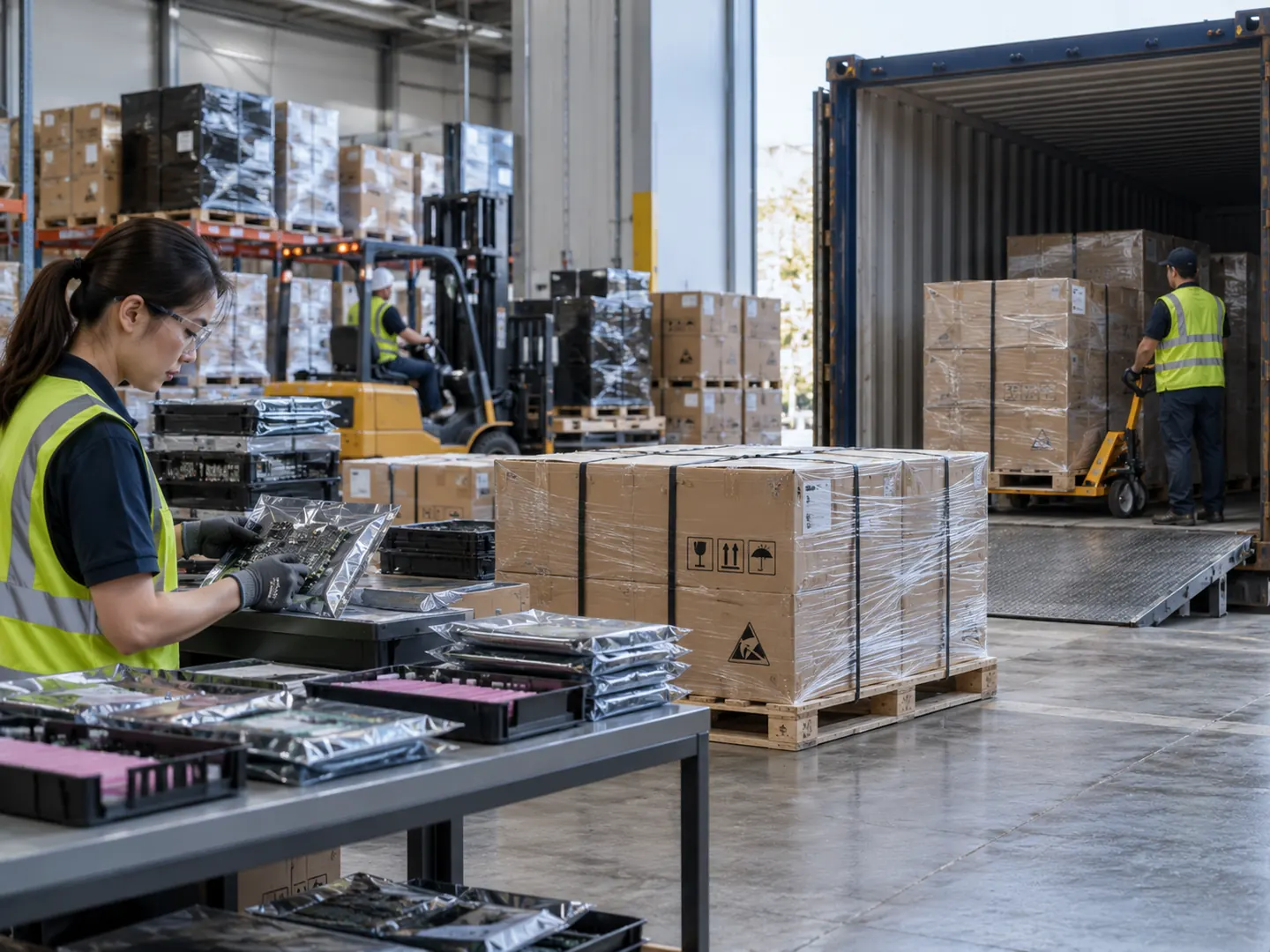
Battery, magnetic, liquid and high-value characteristics can change carrier acceptance and handling.
Confirm whether batteries are installed, packed with equipment or shipped separately, plus available test and specification information.
Disclose magnetic, liquid, powder or other characteristics before the shipment is matched to an air or ocean channel.
Higher-value devices may require stronger packaging, shipment-control procedures and insurance discussion.
Use urgency, chargeable weight, replenishment volume and handling exposure to choose the freight mode.
Electronics shipments can look simple from the outside, but the freight plan may change when the products contain lithium batteries, strong magnets, liquids, wireless components or high-value assemblies. The product description and technical characteristics should be reviewed before the shipment is matched to an air or ocean channel.
For urgent launch stock, samples or replacement components, air freight may be considered. For larger replenishment orders, FCL or LCL ocean freight can provide a more cost-controlled structure. Multi-supplier consolidation in China can also help buyers combine components or finished products into one export shipment.
Rey Logistics focuses on commercial China-origin cargo to the USA, Canada and Mexico. The final recommendation depends on the actual commodity, package dimensions, chargeable weight, cargo-ready date, importer arrangement and final delivery address.
The industry page defines the cargo problem first; the service page then explains the transport method, pricing basis and written scope.
Origin guides add factory pickup, consolidation and export-gateway planning around the actual sourcing location.
Electronics, batteries and Pearl River Delta supplier coordination
Open origin guide China originFoshan / Zhongshan sourcing, furniture, machinery and mixed cargo
Open origin guide China originEast China manufacturing, air cargo and container gateways
Open origin guide China originZhejiang suppliers and high-volume ocean export planning
Open origin guideUse the destination guide to add gateway, customs handoff, inland movement and city-specific receiving requirements.
West Coast port, air and inland delivery planning
Open destination guide USAEast Coast gateway and Northeast commercial delivery
Open destination guide USAMidwest inland freight, air and distribution hub
Open destination guide CanadaPacific gateway with rail and Western Canada delivery
Open destination guide CanadaGTA air / inland delivery and distribution planning
Open destination guide MexicoInland commercial market with air and port-to-inland options
Open destination guideThese four planning stages convert product information into a workable origin, transport and destination scope.
Confirm product type, battery status, magnets, liquids and other characteristics relevant to transport.
Prevents the cargo from being matched to an unsuitable carrier or service.Compare air freight, FCL and LCL around urgency, chargeable weight, volume and handling risk.
Helps the buyer balance lead time and landed freight cost.Receive products or components from several suppliers, check references and prepare one export shipment.
Supports buyers managing multiple factories or staggered production schedules.Coordinate customs handoff and delivery to an eligible commercial address in the USA, Canada or Mexico.
Clarifies responsibility after arrival and reduces delivery misunderstandings.Each stage is confirmed against the actual cargo before the route or quotation is treated as workable.
Collect model details, battery information, package dimensions, weights, values and photos where useful.
Compare urgency, chargeable weight, volume and carrier eligibility before selecting the mode.
Arrange pickup, consolidation, documentation and booking milestones in China.
Coordinate customs information and the agreed commercial delivery scope.
The industry keyword identifies the cargo type; the actual route still depends on shipment-specific data.
Answers are planning guidance. Carrier acceptance, customs and final delivery remain shipment specific.
Many electronics can be reviewed for air freight, but the product description, battery status, magnets, dimensions, weight and destination must be confirmed before a channel is approved.
Ocean freight is often considered for larger replenishment orders where the delivery schedule allows a longer transit time and the buyer wants to control cost per unit.
Yes. Cargo can be received from multiple suppliers in China, checked against shipment references and consolidated into one export plan.
High-value cargo can be reviewed, but the declared value, packing, shipment-control requirements, insurance arrangement and delivery scope should be discussed before booking.
Provide the battery type, chemistry, configuration, capacity or watt-hour information, whether the battery is standalone or installed in equipment, and the available transport documents.
Send the exact product, battery information, package dimensions, value, Chinese supplier and final destination.